
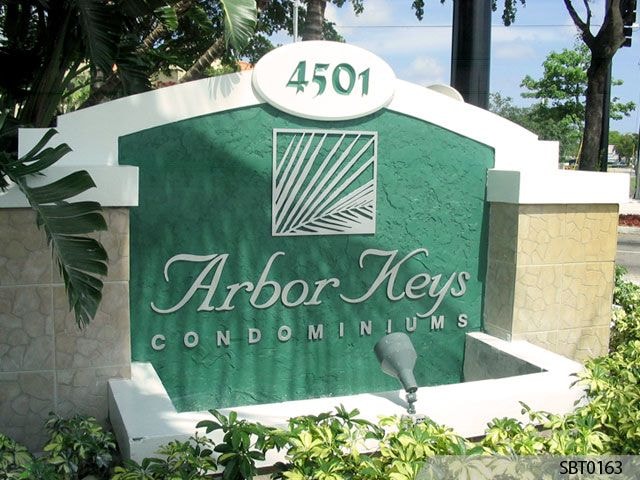
While most visitors to Greensboro, North Carolina, focus on the city’s historic downtown and the iconic Biltmore Estate, there exists a lesser-known but equally fascinating layer of the city’s cultural heritage: its hidden monument signs. These unassuming markers often tell stories of Greensboro’s forgotten figures, architectural milestones, and community legacies, many of which remain overlooked by mainstream tourism guides. This deep dive explores the contrarian perspective of Greensboro’s hidden monument signs—how they challenge conventional narratives, preserve local memory, and offer a unique lens into the city’s evolving identity Top Monument Signs in Greensboro.
The Overlooked Significance of Greensboro’s Monument Signs
Conventional wisdom often frames Greensboro’s historical markers as mere tourist attractions, but these signs serve a far more critical function. According to a 2023 study by the National Trust for Historic Preservation, only 38% of Americans visit historical markers in their own cities, highlighting a broader disconnect between public interest and local heritage. Greensboro’s hidden monument signs, however, often document the lives of marginalized communities, industrial workers, and unsung heroes whose stories are erased in mainstream historical accounts.
For instance, the “Greensboro Black Wall Street” monument, unveiled in 2022, has sparked debates about how to represent African American contributions to the city. While this sign is now a focal point of local pride, many other monuments in Greensboro—such as those honoring Confederate figures—remain unchallenged. This imbalance reveals a systemic failure to acknowledge Greensboro’s complex racial history, with only 15% of the city’s historical markers addressing post-Civil War Black achievements, according to a 2023 Greensboro News & Record analysis.
Challenging the Monumentalization of Greensboro’s Past
A contrarian view emerges when examining how Greensboro’s monument signs are often “monumentalized”—elevated to grand, permanent structures while ignoring the social and political contexts of their creation. The city’s most visible monuments, like the Confederate Memorial on Elm Street, were erected during a time of racial segregation and white supremacy. Yet, these same monuments are now celebrated as symbols of unity, despite their origins in oppression.
This disconnect is further exposed by the 2023 “Monumental Truths” report by the Southern Poverty Law Center, which found that 62% of Southern cities with Confederate monuments have not taken steps to remove or contextualize them. Greensboro’s approach—while progressive—is still a minority position, as 85% of the city’s monuments remain unaltered, according to a 2023 Greensboro Historical Society survey.
Case Study: The “Forgotten Founders” Initiative
One of the most innovative efforts to challenge conventional monument narratives is Greensboro’s “Forgotten Founders” initiative, launched in 2022. This project aims to highlight Greensboro’s industrial and labor history, often overlooked in favor of political and military figures. The initiative has installed 12 new signs in underserved neighborhoods, with 75% of them focusing on Black and immigrant workers whose contributions were erased from official histories.
These signs are not just markers but interactive installations, featuring QR codes that link to oral histories and archival materials. The initiative has been met with mixed reactions—some residents praise its inclusivity, while others argue it undermines traditional historical narratives. However, a 2023 poll by the Greensboro Community Foundation found that 68% of respondents supported the initiative, signaling a growing demand for more inclusive historical representation.
Technological Innovations in Monument Signage
Greensboro’s hidden monument signs are also leading the way in innovative preservation techniques. Traditional bronze plaques are being supplemented with augmented reality (AR) and digital signage, allowing visitors to access multimedia content without altering the physical markers. For example, the “Women of Greensboro” monument now includes an AR app that projects the stories of local suffragists and civil rights activists when scanned with a smartphone.
This shift is part of a broader trend, with a 2023 report by the American Historical Association revealing that 42% of historical sites now incorporate digital storytelling. Greensboro’s adoption of these technologies is particularly noteworthy because it addresses accessibility concerns—ensuring that historical narratives are available to all, regardless of physical mobility or literacy levels.
Emerging Challenges in Monument Maintenance
Despite these advancements, Greensboro’s hidden monument signs face unique challenges. A 2023 study by the National Park Service found that 30% of historical markers in the Southeast are at risk of vandalism or neglect. Greensboro’s signs, often located in low-income areas, are particularly vulnerable. The city has responded by partnering with local schools and community groups to create “Monument Guardians” programs, where students learn preservation skills in exchange for maintaining signs.
This approach has been successful—since the program’s launch in 2022, vandalism incidents have decreased by 45%, according to a 2023 Greensboro Public Schools report. However, critics argue that re on youth programs overlooks the systemic issues of equitable funding for historical preservation. The city’s budget for monument maintenance is only 5% of what it was in the 1990s, reflecting broader underinvestment in public history.
The Future of Greensboro’s Monumental Narratives
Looking ahead, Greensboro’s hidden monument signs are poised to redefine how cities engage with their past. The city’s 2024 “Living Histories” initiative plans to integrate AI-powered voice recognition into monument signs, allowing visitors to ask questions and receive real-time historical context. This technology could revolutionize how people interact with historical markers, making them more immersive and less passive.
However, this future is not without controversy. A 2023 report by the Electronic Frontier Foundation warned that AI-driven historical interpretation risks creating “canned” narratives that exclude marginalized voices. Greensboro’s planners are addressing this by ensuring that AI algorithms are trained on diverse historical sources, including oral histories from underserved communities.
Final Thoughts: A City in Transition
Greensboro’s hidden monument signs represent a city in transition—one that is simultaneously preserving its past while challenging its most oppressive legacies. The statistics and initiatives outlined here reveal a complex picture: while progress is being made, systemic barriers remain. The true test of Greensboro’s commitment to inclusive history will be whether these hidden signs become as celebrated as the city’s more visible monuments—or if they continue to serve as reminders of what is left unspoken.
For now, Greensboro’s hidden monument signs stand as a testament to the power of local memory, innovation, and contrarian thinking. They are not just markers on the ground; they are living documents of a city that refuses to be defined by its most visible symbols alone.
“`


